
The Manufactured Home Inspection Checklist: What Buyers Must Check Before Closing
A manufactured home inspection is not the same as a standard site-built inspection. From the steel chassis and underbelly vapor barrier to HUD labels and HCD title, here is exactly what a proper inspection covers, what red flags to watch for, and what you must verify before you sign anything.
You found a manufactured home you love. The price fits your budget. The community looks great. You are already mentally decorating the living room.
Before you get too far ahead of yourself, there is one critical step that can make or break this purchase: the inspection.
Here is what you should know: a manufactured home inspection is not the same as a standard site-built home inspection. The systems are different. The construction is different. The things that can go wrong are different. And most importantly, the inspector you hire should be different.
This guide breaks down what a proper manufactured home inspection covers, what red flags to watch for, and what you absolutely must check before you sign anything.
Why Manufactured Home Inspections Are Different
A traditional home inspector is trained on wood-frame construction, poured concrete foundations, and standard residential systems. That knowledge does not always translate cleanly to a manufactured home built on a steel chassis with a different structural approach, a belly board vapor barrier, and components that have very specific HUD-code standards.
Common things a general inspector might miss:
- Underbelly damage and vapor barrier failure
- Chassis rust or outrigger corrosion
- Marriage wall issues on double-wide homes
- HUD Data Plate condition and location
- HUD label verification on the exterior
The result? Buyers end up with expensive surprises after closing, issues that a qualified manufactured home inspector would have caught on day one.
Hire an inspector with documented manufactured home experience. Ask specifically how many manufactured home inspections they have completed. If the answer is vague, keep looking.
The Complete Manufactured Home Inspection Checklist
Here is what a thorough inspection should cover from top to bottom, literally.
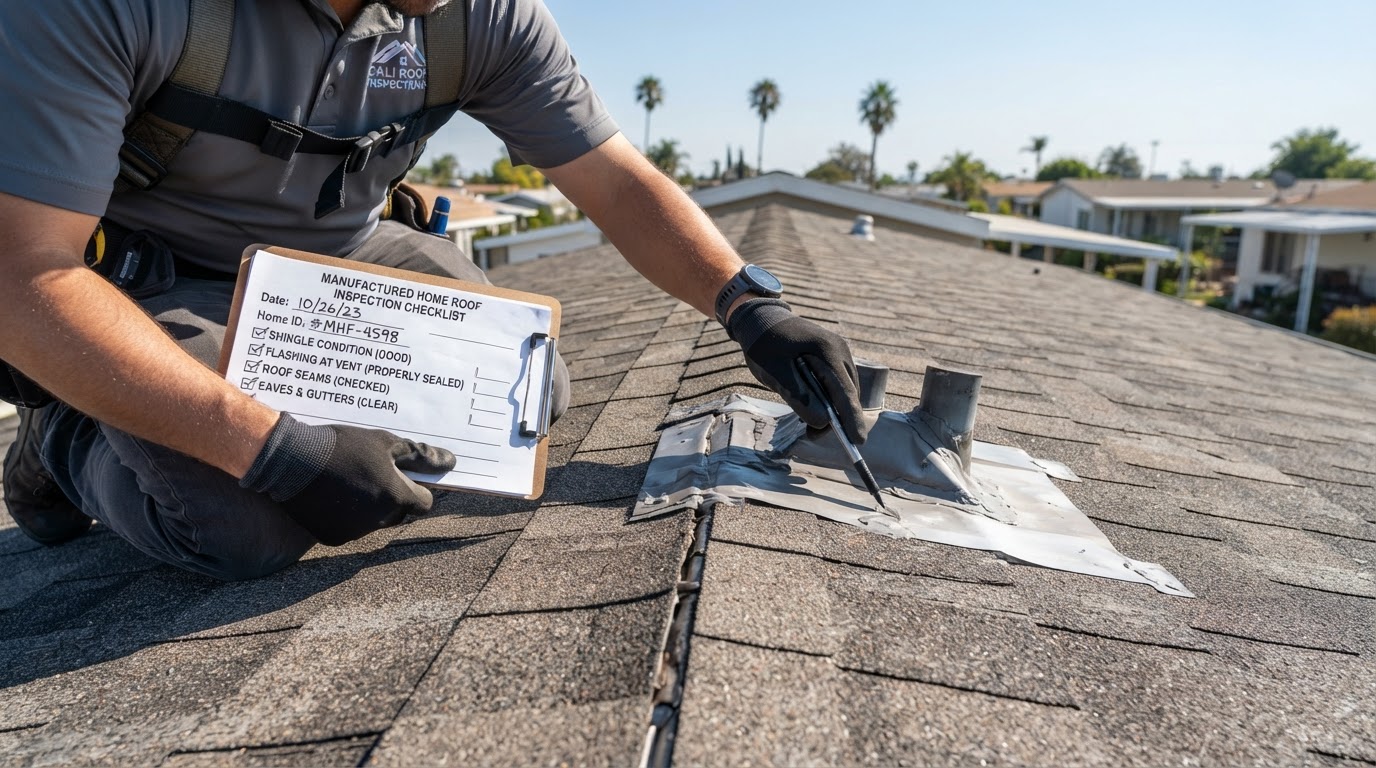
1. The Roof
Start at the top. Roof condition is one of the most common and costly issues in older manufactured homes. Look for:
- Missing, curling, or damaged shingles
- Soft spots that indicate water intrusion below the surface
- Condition of roof seams and flashing, especially on older flat or low-pitch roofs
- Evidence of past or current leaks in the ceiling inside
- Condition of any roof-mounted HVAC equipment
A compromised roof means water gets in. Water damage is expensive, time-consuming, and can spread quickly in a manufactured home's wall and floor system.
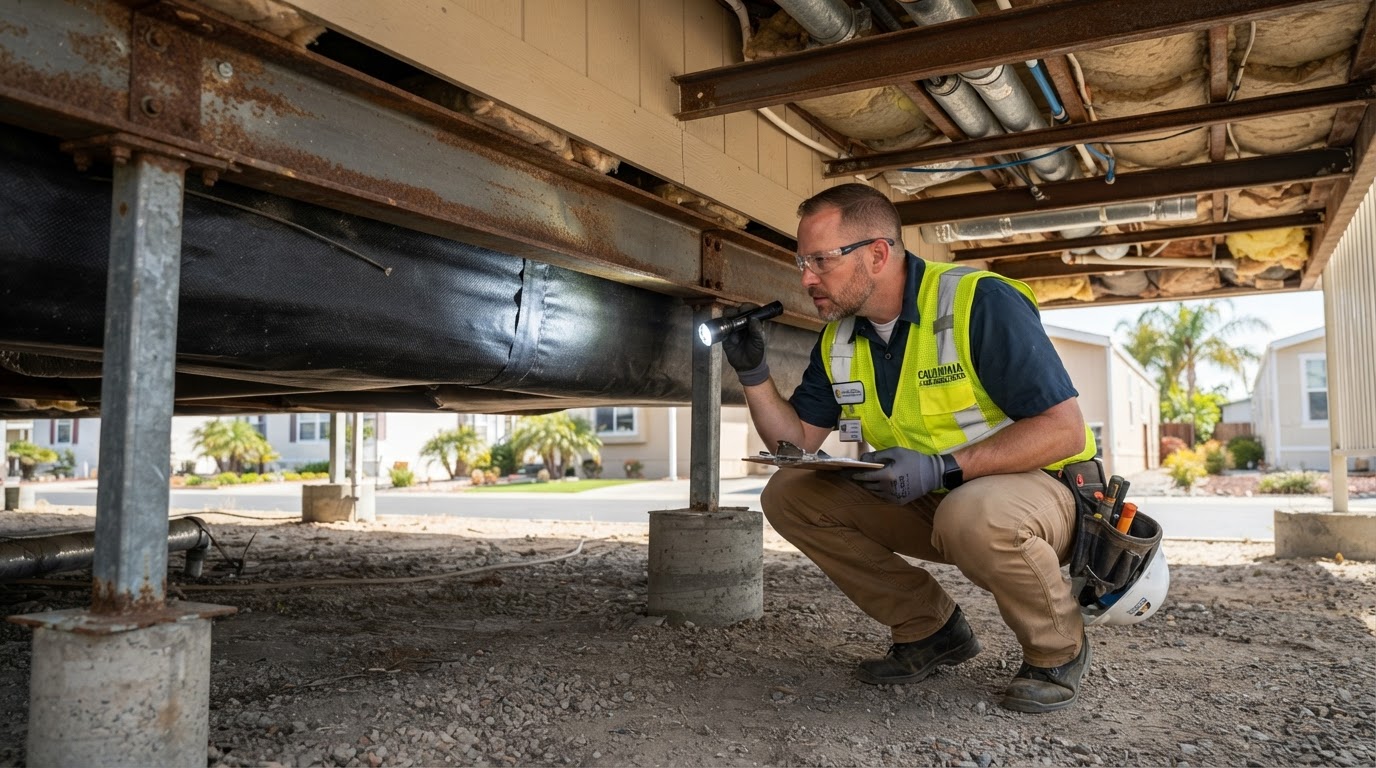
2. The Underbelly and Vapor Barrier
This is the area most general inspectors skip or underinspect, and it is one of the most important.
The belly board and vapor barrier protect the home's floor system from moisture, rodents, and temperature extremes. Damage here can mean:
- Soft or spongy floors (a serious structural problem)
- Mold or mildew growing in the subfloor
- Damaged insulation reducing energy efficiency
- Evidence of rodent activity or nesting
An inspector should get under the home and actually look. If they are not willing to crawl the underbelly, that is a problem.
3. The Steel Chassis and Outriggers
Every manufactured home sits on a steel frame. That frame can rust, especially in coastal California communities where salt air and moisture accelerate corrosion.
Have the inspector check:
- Main beam condition along the length of the chassis
- Outrigger arms that support the floor system width
- Hitch assembly area (if still present)
- Signs of previous repairs or welding
Minor surface rust is common on older homes and not always a dealbreaker. Heavy corrosion that has compromised structural integrity is a different story entirely.
4. The Marriage Wall (Double-Wides)
If you are buying a double-wide or triple-wide, the marriage wall, where the two or more sections meet, deserves close attention. This is a common area for:
- Separation or gaps between sections
- Roof ridge issues at the seam
- Water intrusion along the joint
- Unlevel floors caused by uneven settling of the two sections
Ask the inspector to check the marriage wall ceiling line, exterior roofline seam, and interior floor level across the joint.
5. Plumbing and Water Heater
Manufactured homes use flexible PEX or polybutylene-style plumbing in many older models. Check for:
- Evidence of leaks under sinks, around the water heater, and in utility closets
- Water heater age and condition (look for corrosion around connections)
- Water pressure at fixtures
- Evidence of past repairs with mismatched materials
- Drain and sewer connections under the home
Polybutylene pipe, used in many homes built in the 1980s and 1990s, is known to fail. If present, budget for eventual replacement.
6. Electrical Panel and Wiring
Electrical systems in manufactured homes are built to HUD code, which differs from local building codes for site-built homes. Key things to check:
- Panel condition, breaker labeling, and no evidence of overloading
- GFCI protection in bathrooms, kitchens, and exterior outlets
- Evidence of unpermitted additions tied into the original panel
- Exterior electrical connections from the park's pedestal
- Condition of the power supply cable and weatherhead
Unpermitted electrical work added by previous owners is a common finding, and it matters for both safety and financing.
7. HVAC Systems
Heating and cooling are critical in California's varied climate, from coastal marine layers to scorching inland summers. Inspect:
- Age and condition of the furnace or heat pump
- Central air conditioning operation and refrigerant lines
- Ductwork under the home for disconnection, damage, or blockage
- Evaporative cooler condition, if present
- Thermostat function and filter condition
HVAC replacement in a manufactured home is not always cheap. Know the age of the equipment before you close.
8. Leveling and Foundation
Is the home level? This matters more than most buyers realize. An unlevel home causes:
- Doors and windows that stick or will not latch
- Floor stress and cracking
- Strain on the marriage wall in double-wides
- Long-term structural problems if left unaddressed
The inspector should check levelness at multiple points using a quality level tool. If the home is significantly out of level, re-leveling is a required repair and should be negotiated before closing.
For land-owned homes with a permanent foundation and a recorded 433A, the inspector should also verify that the foundation system matches the documentation. The details matter.
Don't Skip the Paper Trail
A physical inspection covers what you can see and test. But manufactured home transactions have a paper trail that matters just as much.
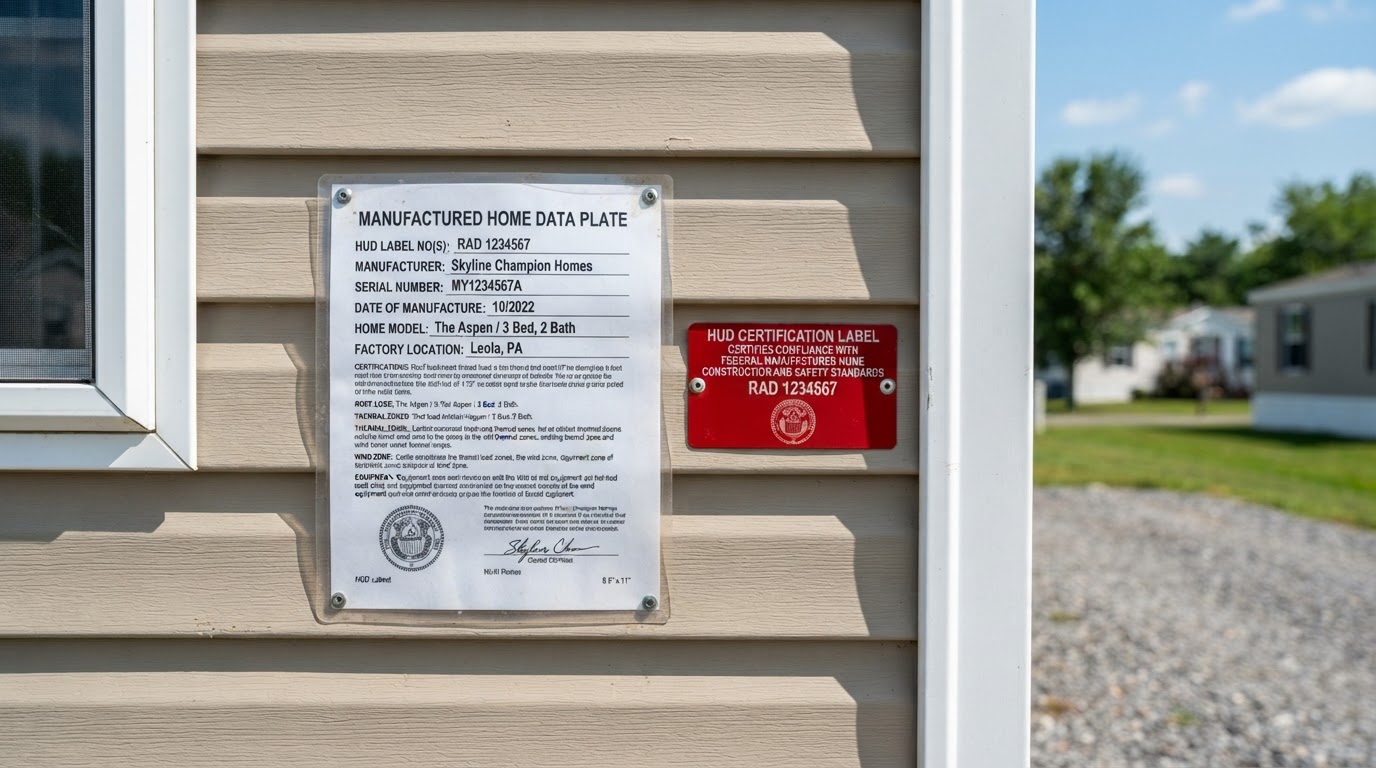
HUD Data Plate
Every manufactured home built after June 1976 has a HUD Data Plate, a paper document inside the home (typically in a kitchen cabinet, bedroom closet, or utility room). It contains:
- The manufacturer's name and model
- The serial number (VIN)
- Wind zone, roof load, and thermal zone ratings
- Original features and certifications
This document is critical for financing and insurance. If it is missing, replacement is possible through the manufacturer or HUD, but it takes time and documentation. Know its status before closing.
HUD Labels (Exterior)
Look for the small red or silver metal plates on the exterior of each section of the home. These labels confirm the home was built to HUD code. Missing or removed labels can block financing, and there is a formal replacement process, but it takes time and adds cost.
Never skip this step. Never buy a home without verifying these are present and match the title documents.
HCD Title Search
In California, manufactured home ownership is tracked through the Department of Housing and Community Development (HCD), similar to how the DMV handles vehicle titles. Before closing, a proper HCD title search should verify:
- The current legal owner matches the seller
- No unreleased liens on the title
- Registration fees are current
- No probate or legal encumbrances
- The serial number on the title matches the home
Title issues are one of the most common reasons manufactured home closings get delayed or fall apart. Work with an escrow officer who has real experience with HCD title transfers, not someone learning on your transaction.
Park Rules: The Inspection Step Most Buyers Miss
If you are buying a home in a land-lease community, the park itself is part of what you are evaluating. Before closing, review the park's rules and regulations in full.
Under California's Mobilehome Residency Law (MRL), parks must provide their rules in writing, and they cannot enforce rules that were never disclosed to residents. Things to look for in the rules:
- Restrictions on home age or exterior appearance
- Pet policies (size, breed, and number limits)
- Parking and vehicle restrictions
- Guest and occupancy policies
- Landscaping requirements for your space
Also ask about space rent history. Space rent control in California is local, not statewide. Some cities have rent stabilization ordinances that limit annual increases. Others have no restrictions at all. Knowing the rent history helps you project your true long-term monthly cost accurately.
Common Buyer Mistakes to Avoid
Let us be direct about what goes wrong:
- Hiring a general home inspector without MH experience. They will miss manufactured-home-specific issues every time.
- Skipping the underbelly inspection. Out of sight, out of mind, until the floor gets soft and you are facing a major repair.
- Ignoring the HUD labels and Data Plate. Missing documentation can delay or kill your loan.
- Not reading the park rules before making an offer. Find out about the pet restriction or the home-age limit before you fall in love with the property.
- Failing to check the HCD title for liens. An unreleased lien can hold your closing hostage.
What a Great Inspection Gives You
A thorough manufactured home inspection does three things.
First, it tells you exactly what you are buying. No surprises after closing. No discovering the furnace is 22 years old the first cold morning you are in the home.
Second, it gives you negotiating information. Issues found during inspection can support a price adjustment, seller credit, or required repairs before closing. Knowledge creates confidence, at the negotiating table and everywhere else.
Third, it gives you peace of mind. Even if the inspection comes back clean, you close knowing you looked carefully. That is worth something.
The right answer, what to fix, what to negotiate, what to walk away from, depends on the home, the land, and the condition. Every manufactured home is different. That is why this step matters so much.
Ready to Search California Manufactured Homes?
CoMoHo.com is California's dedicated manufactured home search platform. Search by ownership type, in-park land-lease, land-owned, or resident-owned communities, across San Diego County, Orange County, Riverside County, and beyond.
Have questions about financing before you inspect? Our partners at Compadre Mortgage (CBMLoans.com) specialize exclusively in manufactured home lending across California: chattel loans, land-owned financing, FHA, VA, and conventional programs.
Whether you are buying your first manufactured home or moving up to something better, Rory and the Compadre team are here with straight answers and real expertise.
Have Questions About This Topic?
Rory the Broker is here to provide straight answers and expert guidance for your manufactured home journey.