
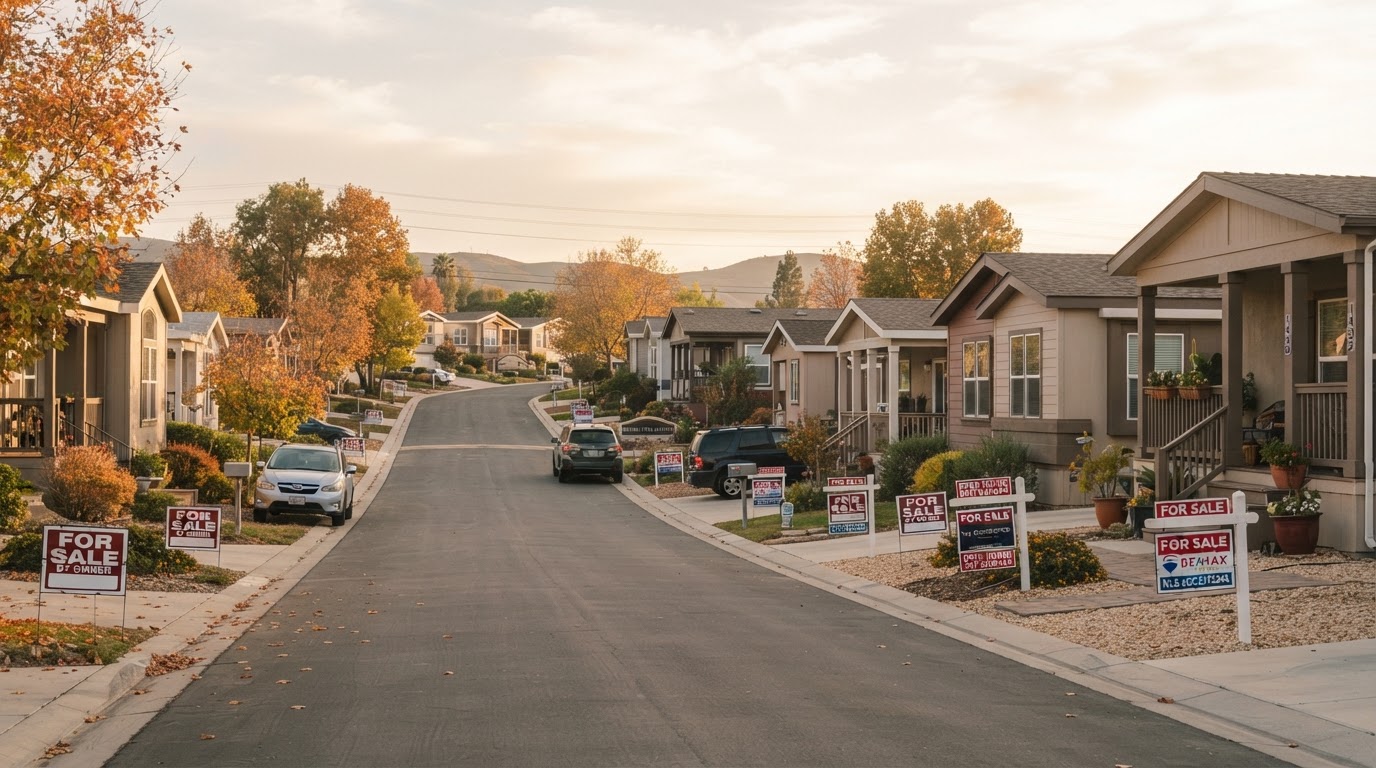
Are We Firmly in a Buyer's Market? What 2026 Inventory and Rates Really Mean
Fresh listings are at their highest level since 2022, homes are sitting longer, and sellers are cutting prices. But with mortgage rates stuck near 7%, the answer is more nuanced than the headlines suggest. Here is what the data actually says — and what it means for California manufactured home buyers and sellers.
Open any real estate headline right now and you will see the same story: inventory is climbing, homes are sitting longer, and sellers are cutting prices. It sounds like a buyer's market. But the fine print — mortgage rates hovering near 7% — changes the math in ways the headlines skip.
So are we firmly in a buyer's market? The honest answer is: for some buyers, yes. For others, the affordability wall is as high as it has ever been. Here is what the current data actually shows, how it plays out in California's manufactured home market, and what it means for your next move.
What the 2026 Data Actually Says
Four signals define the current market, and they pull in different directions:
- Rising inventory. Fresh listings have reached their highest level since August 2022, giving house hunters more options than they have had in years.
- Buyer leverage. Because homes are sitting on the market longer and sellers outnumber active buyers, purchasers have more negotiating power to ask for closing costs, repairs, and price concessions.
- Sticky mortgage rates. The 30-year fixed rate hovers near 6.6% to 7%, keeping affordability a major hurdle for financed buyers.
- Softening prices. Median asking prices have started to tick down slightly year-over-year as sellers adjust expectations to meet sluggish demand.
Three of those four signals point toward buyers. The fourth — rates — is the one that keeps the door from swinging fully open.
Why "Buyer's Market" Is Not the Whole Story
A true buyer's market means buyers have power and can act on it. Right now, buyers have power on paper but face a serious affordability constraint. A 7% mortgage rate on a conventional loan raises the monthly payment on any given price by roughly 40% compared to the 3% world of 2021. Lower asking prices help, but they do not fully offset the rate impact for financed buyers.
The result is a split market. Cash and large-down-payment buyers are operating in a genuine buyer's market — more inventory, more negotiating room, less competition. Financed buyers are getting more selection and price flexibility, but their purchasing power is capped by the rate environment. As we wrote in our piece on cash buyers in a rising-rate environment, that gap is exactly where leverage compounds.
How This Shows Up in Manufactured Housing
Manufactured homes respond to the same forces, but with a few twists that matter:
- Chattel financing is even more rate-sensitive. In-park homes financed with chattel loans already carry higher rates than conventional mortgages. When baseline rates sit near 7%, chattel rates climb further, which thins the financed buyer pool for land-lease homes and gives cash buyers outsized leverage.
- Space rent compounds the affordability squeeze. For land-lease buyers, the monthly cost is loan payment plus space rent. Sticky rates make the loan portion heavier, and scheduled space rent increases add to it. That is why understanding the land-lease vs. land-owned structure is essential right now.
- Land-owned homes track the conventional market. Manufactured homes on owned land behave more like traditional real estate, so they feel the inventory buildup and price softening directly — which means more negotiating room for buyers who can qualify for conventional, FHA, or VA financing.
- Condo-style financing pressure has a parallel. The broader condo market is under pressure from tighter Fannie Mae and Freddie Mac guidelines and rising insurance costs. Similar scrutiny can affect certain park communities and older manufactured home financing, so buyers should verify loan eligibility early.
Net effect: manufactured home sellers face more competition and longer days on market, while buyers — especially cash buyers — have room to negotiate that simply did not exist two years ago.
What Buyers Should Do Right Now
If you are buying, this is one of the better windows in recent memory — but only if you structure the purchase correctly.
- Negotiate the full package, not just price. With homes sitting longer, ask for closing costs, repairs, and rate buydowns in addition to price concessions. Sellers motivated to close are increasingly willing to contribute.
- Compare total monthly cost, not sticker price. A lower price at a 7% rate can still carry a higher monthly payment than a slightly higher price at a bought-down rate. Run both numbers.
- Lead with proof of funds or pre-approval. In a market with fewer competing buyers, a clean, documented offer stands out even more and unlocks bigger concessions.
- Evaluate the park as carefully as the home. For land-lease purchases, stable and transparent space rent protects you against the affordability squeeze worsening over time.
What Sellers Should Do Right Now
If you are selling, the days of aspirational pricing are over — but motivated buyers are still closing, especially before year-end.
- Price to the market, not to memory. Median asking prices have softened year-over-year. A sharp, defensible price attracts the serious buyers who remain; an aspirational price lets your listing go stale.
- Be ready to concede. Buyers have leverage and they know it. Building in room for closing-cost contributions or repairs often closes a deal faster than holding firm on price.
- Target the motivated buyer. As we covered in our fall market guide, the remaining buyers after summer are serious and have real deadlines. Frame your listing around closing before year-end.
- Have paperwork ready. Park approvals, space rent documentation, and title status all need to be clean. Friction is what kills deals in a slower market.
Rory's Take
Are we firmly in a buyer's market? For cash and well-qualified buyers, yes — and firmly. More inventory, longer days on market, softening prices, and real negotiating room add up to the best buying window in years. For financed buyers, it is a buyer's market with an asterisk: selection and leverage are better, but the 7% rate ceiling caps how much of that leverage you can actually use.
The mistake is treating "buyer's market" as a single switch. It is a spectrum, and where you sit on it depends on your financing, your timeline, and whether you are buying the land or leasing it. Get those three things right and 2026 is a genuine opportunity. Get them wrong and the headlines will not save you.
At CoMoHo, we help buyers and sellers read the actual market — not the headlines — and structure deals that work in this rate environment. Search available manufactured homes, or request a value review if you are thinking about selling.
Have Questions About This Topic?
Rory the Broker is here to provide straight answers and expert guidance for your manufactured home journey.