
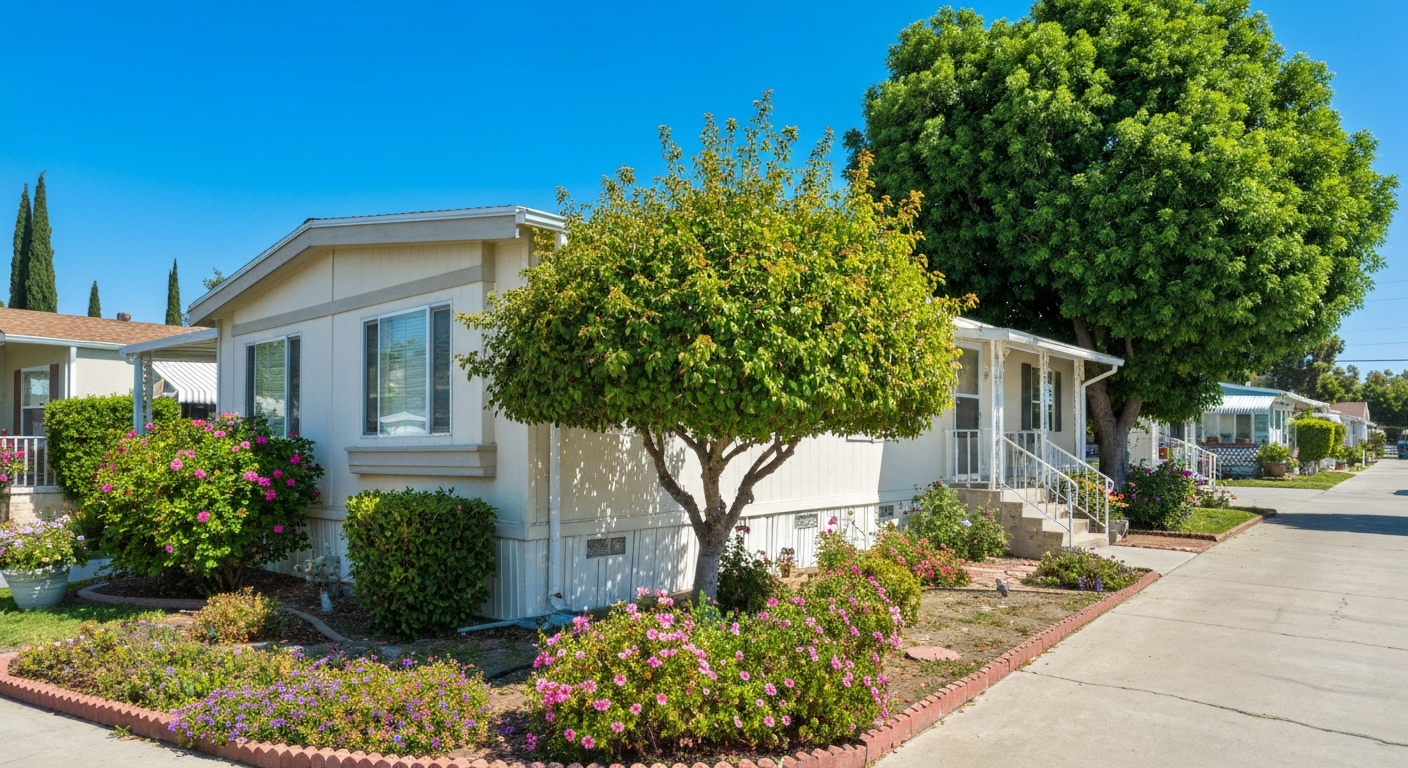
Why Pre-HUD Mobile Homes Are Not Going Away
Pre-HUD mobile homes remain one of the few affordable housing paths in California. Here is why they are still standing, still selling, and still providing value to buyers and sellers.
Every few years, someone decides that older mobile homes are finished.
They say the homes are too old. They say parks will eventually require replacement. They say lenders will stop lending. They say buyers will only want newer manufactured homes.
And yet, here we are.
Pre-HUD mobile homes — homes built before the federal manufactured housing construction standards took effect in June 1976 — are still standing, still selling, still being renovated, and still providing one of the few remaining affordable housing paths in California.
That is not an accident.
It is economics.
It is demand.
And it is the reality of California housing.
First, What Does “Pre-HUD” Mean?
A Pre-HUD mobile home is generally a factory-built mobile home constructed before the federal HUD Code became effective in 1976. After that date, manufactured homes were built under federal construction and safety standards and were required to carry HUD certification labels.
That distinction matters for lending, insurance, resale, appraisal, and buyer expectations.
But it does not mean every Pre-HUD home is worthless.
It does not mean every Pre-HUD home is unsafe.
And it definitely does not mean every Pre-HUD home is going to disappear.
In the real market, condition matters. Park rules matter. Location matters. Space rent matters. Buyer budget matters. Financing availability matters. And perhaps most of all, replacement cost matters.
Reason One: Renovating an Older Home Can Be Far Less Expensive Than Replacing It
This is the big one.
In theory, replacing an older mobile home with a newer manufactured home sounds simple. Pull out the old home. Bring in a beautiful new one. Problem solved.
In reality, replacement can be expensive, slow, complicated, and sometimes completely unrealistic.
A homeowner may have to deal with demolition, hauling, park approval, permits, utility upgrades, site work, new home delivery, installation, skirting, stairs, awnings, carports, porches, inspections, and possible rent changes. In some communities, a replacement may also trigger new park standards or upgrade requirements.
That can turn a “simple replacement” into a very large project.
Meanwhile, many older homes can be substantially improved with targeted renovation. New flooring. Updated kitchen. Refreshed bathrooms. Interior paint. Exterior paint. Roof work. Plumbing repairs. Electrical improvements. Window replacement. Deck repair. Better lighting. Cleaner landscaping.
Not every older home is a candidate. Some are too far gone. Some have structural, safety, moisture, or system issues that make replacement the smarter choice.
But many Pre-HUD homes are not teardown candidates. They are renovation candidates.
That is why they keep surviving.
If a buyer can purchase an older home at a lower price, improve it over time, and still own a livable home in a desirable community, that home has market value.
California buyers understand this better than anyone. They are not comparing a Pre-HUD mobile home to a perfect new home in a vacuum. They are comparing it to everything else they can afford.
And in many cases, the older mobile home still wins.
Reason Two: California Still Has Enormous Affordable Housing Demand
California has an affordability problem that is not going away anytime soon.
For many buyers, the traditional single-family home has moved out of reach. Condos may still be expensive. Apartments keep getting more costly. Senior housing can be limited. And many people simply want a smaller, simpler, more manageable place to live.
That is where mobilehomes and manufactured homes continue to matter.
They are not just “cheap housing.” They are a form of attainable housing that serves real people: retirees, first-time buyers, downsizers, working families, widows, veterans, and people who want independence without a million-dollar mortgage.
In California, mobilehome and manufactured home communities remain one of the most important affordable homeownership options left.
Pre-HUD homes are part of that ecosystem.
Are they perfect? No.
Do they require careful review? Absolutely.
Should buyers inspect them carefully, understand park rules, verify space rent, review title, check financing options, and understand resale limitations? Yes, yes, yes, and one more yes for the people in the back.
But affordability creates demand. Demand creates resale value. And resale value keeps these homes in the market.
Reason Three: Lenders Are Still Lending
Here is another reason Pre-HUD homes are not disappearing: financing has not vanished.
Now, let’s be clear. Pre-HUD mobile homes are not treated the same way as newer manufactured homes. Many conventional, FHA, VA, and real-estate-secured loan programs have strict eligibility rules tied to HUD construction standards, permanent foundations, land ownership, and post-1976 construction.
That means Pre-HUD homes are often not eligible for the same financing as newer manufactured homes on owned land.
But that is not the same as saying there is no financing.
Specialty manufactured home lenders may still consider certain older mobile homes, especially in land-lease communities, depending on the home, the age, condition, location, borrower qualifications, community, down payment, and lender guidelines.
The loan terms may be different. The down payment may be higher. The rate may be different. The amortization may be shorter. The approval process may be more specialized.
But lending still exists.
That matters.
When financing remains available, even in a more limited form, it keeps buyers in the market. And when buyers can still buy, sellers can still sell.
This is one of the most misunderstood parts of the older mobile home market. People hear “Pre-HUD” and assume “cash only.” Sometimes that is true. Often it is not.
The real answer is: it depends.
That is why working with someone who understands manufactured home lending is so important.
The Market Is Not Sentimental. It Is Practical.
The Pre-HUD market is not being held together by nostalgia.
It is being held together by practical math.
If a buyer can buy an older mobile home for significantly less than a newer home, improve it, live in it, and enjoy the community, that home has a role.
If a seller can renovate instead of replacing, that home may have a second life.
If lenders still support certain transactions, the market keeps moving.
And if California continues to have a severe affordability gap, older mobile homes will remain part of the solution.
That may not make everyone happy. But it is true.
What Buyers Need to Watch Carefully
None of this means buyers should be careless.
Older mobile homes require serious due diligence.
Before buying a Pre-HUD home, buyers should look closely at:
- The roof
- Plumbing
- Electrical systems
- Floors and subfloors
- Windows
- Heating and cooling
- Water intrusion
- Additions or unpermitted structures
- Park approval requirements
- Space rent and rent increases
- Park rules
- Title status
- Insurance availability
- Financing terms
- Resale limitations
This is not the place to wing it.
A well-maintained older home in a good community can be a smart purchase. A poorly maintained older home with major hidden issues can become a money pit wearing vintage paneling.
And nobody needs a money pit with paneling. We have all suffered enough.
What Sellers Need to Understand
Sellers of Pre-HUD homes should also be realistic.
The home’s value is not based only on age. It is based on condition, location, park quality, space rent, buyer demand, financing availability, and comparable sales.
A clean, well-presented older home will usually perform better than a neglected one.
Preparation matters.
Small improvements can make a major difference. Cleaning, paint, flooring, lighting, landscaping, minor repairs, and good photos can change the way buyers see the home.
Pricing also matters. Overpricing an older mobile home can scare away the very buyers who would otherwise appreciate it. The right price creates activity. Activity creates confidence. Confidence creates offers.
And promotion matters too. These homes need to be explained properly. A Pre-HUD home should not be marketed like a generic house. Buyers need context. They need clarity. They need to understand the opportunity and the limitations.
That is where specialized manufactured home marketing makes a difference.
The Future of Pre-HUD Homes
Pre-HUD homes will not last forever. Some will be removed. Some will be replaced. Some will become uneconomical to repair.
But as a category, they are not going away quickly.
There are too many affordability pressures, too many buyers looking for lower-cost housing, too many parks where replacement is expensive, and too many older homes that still have useful life left.
The market is slowly sorting them into three groups:
- Homes worth preserving and improving
- Homes that need major renovation but still have potential
- Homes that are likely replacement candidates
The mistake is treating all Pre-HUD homes the same.
They are not the same.
Some are tired. Some are charming. Some are rough. Some are surprisingly solid. Some are affordable gems. Some need a very brave buyer with tools, patience, and possibly a therapist.
The right answer depends on the home.
The Bottom Line
Pre-HUD mobile homes are still here because they solve a real problem.
They are often less expensive to improve than replace. They serve a massive affordable housing need in California. And in many cases, specialty financing is still available.
That does not mean every older mobile home is a good buy.
It means they deserve a serious, informed evaluation instead of a lazy assumption.
At Compadre Manufactured Homes, we understand this market because we work in it every day. We know the difference between a home with opportunity and a home with warning signs. We understand park rules, space rent, buyer financing, resale issues, and the realities of California manufactured housing.
Older mobile homes are not disappearing.
They are evolving.
And for the right buyer or seller, they may still be one of the most practical housing options California has left.
Have Questions About This Topic?
Rory the Broker is here to provide straight answers and expert guidance for your manufactured home journey.