
What's New and Trending in the Manufactured Housing Industry for 2026
From optional steel chassis and true two-story models to gourmet kitchens, smart-home standards, and comparable-sale financing, the manufactured housing industry is in the middle of its biggest evolution in decades. Here is what is actually new in 2026 — and what it means for California buyers.
Walk through a new manufactured home community in 2026 and you may have to remind yourself that what you are looking at is not site-built construction. The industry is in the middle of a genuine evolution — driven by major federal regulatory shifts, a push for real affordability, and design upgrades that have erased the old "basic box" stereotype.
If you have not looked at manufactured housing recently, almost every assumption you held is probably outdated. Here is a breakdown of what is new and trending across the industry right now.
Regulatory and Structural Shifts
The biggest changes in 2026 are not cosmetic — they are structural, and they start at the federal level.
- The "Optional Chassis" evolution. Historically, the HUD Code required every manufactured home to be built on a permanent steel chassis. A major regulatory overhaul made that chassis optional once the home is delivered, and HUD has proposed removing the permanent chassis requirement for upper stories entirely. That single change unlocked a wave of design freedom that was impossible before.
- The rise of multi-story models. Because the chassis is no longer mandatory for upper levels, manufacturers can now design and build true two-story and multi-story manufactured homes. Denser, more vertical layouts are finally on the table — which matters in a state like California where land is expensive.
- Financing and valuation changes. In a significant win for homeowners, courts and appraisers can now use single-family site-built home sales as comparable data for manufactured homes situated on owned land. That makes it easier to secure conventional financing and build equity the way traditional real estate does — a key consideration when weighing land-lease versus land-owned options.
- Decentralized energy standards. The Department of Energy is no longer dictating rigid one-size-fits-all efficiency rules for the sector. Builders can now offer a wider, customizable range of insulation and efficiency packages matched to local climates — which is especially relevant across California's varied microclimates.
Put together, these shifts mean the gap between a manufactured home and a site-built home is narrowing in the ways that matter most: financing, valuation, and structural design.
High-End Design and Aesthetic Trends
The "basic box" look is gone. Today's manufactured homes are architecturally considered, and the interior trends track closely with what site-built buyers are asking for.
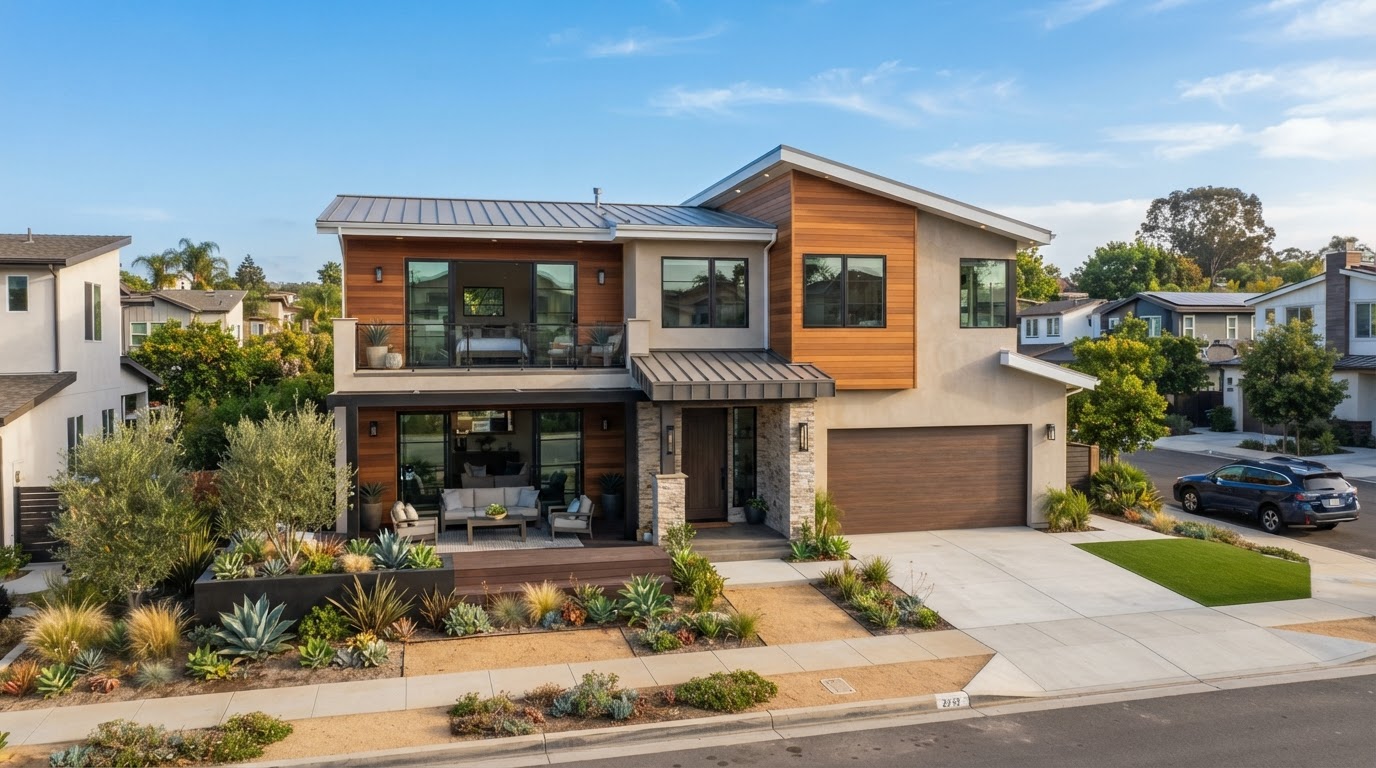
- Real rooflines. Various roof pitches, tilted roofs, and multiple rooflines boost curb appeal and make manufactured homes nearly indistinguishable from traditional houses from the street.
- "Zoned" open floor plans. Wide-open layouts remain popular, but designers are shifting toward zoned spaces — using exposed ceiling beams, partial walls, and varying ceiling heights to elegantly transition between living, dining, and kitchen areas.
- Earthy textures over all-white. The clinical all-white interiors of the past are being replaced by warm natural finishes, earthy tones, wood flooring, and richer textures throughout.
- Gourmet kitchens. Kitchens have become a focal point, featuring large multi-functional islands with seating, hidden walk-in pantries, granite or quartz countertops, and built-in coffee nooks.
- Spa-like primary suites. Freestanding soaking tubs, double vanities, and seamless glass-door walk-in showers are heavily trending — luxury features that used to be reserved for high-end site-built homes.
The takeaway for buyers: the finishes you want are now available in a manufactured home, without the site-built price tag.
Tech and Sustainability Focus
With standard homeownership increasingly out of reach for many Californians, buyers are viewing manufactured homes as the ultimate unsubsidized affordable housing solution — and that is keeping demand near historic highs. Sustainability has become central to keeping long-term ownership costs down.
- Standardized smart homes. Smart thermostats, voice-activated ambient lighting, automated climate controls, and integrated charging stations are transitioning from luxury upgrades to standard factory installations.
- Eco-conscious integration. Built-in solar lighting, low-E UV-coated windows, high-performance insulation, and new high-efficiency HVAC refrigerants are being used to drastically lower monthly utility bills — a meaningful number in a state with California's energy costs.
For buyers weighing monthly carrying costs, these efficiency upgrades compound quickly. Combined with the rate-environment leverage we covered in our piece on whether we are in a buyer's market, the total cost of ownership is looking more favorable than the headlines suggest.
What It All Means for California Buyers
Step back and the picture is clear: manufactured housing in 2026 is not the product it was even five years ago. The chassis changes unlocked multi-story design. The financing and valuation changes made land-owned homes behave more like traditional real estate. The design and tech upgrades made the interiors competitive with anything on the site-built market. And the affordability gap is what is driving record demand.
For California buyers, the practical implications are straightforward:
- If you are buying land-owned, the new comparable-sale rules mean better appraisals and easier conventional financing — so the equity story is stronger than ever.
- If you are buying in a park, chattel financing remains more rate-sensitive, but the homes themselves are nicer, smarter, and more efficient than previous generations — which improves resale appeal and livability.
- If you are energy-conscious, the decentralized DOE standards let you tailor efficiency to your local climate rather than settling for a one-size-fits-all baseline.
Rory's Take
The manufactured housing industry spent decades fighting a reputation problem. In 2026, the product is quietly outgrowing it. Between the HUD regulatory shifts, multi-story design freedom, comparable-sale financing, and genuinely high-end interiors and smart-home standards, the gap between "manufactured" and "site-built" is narrower than it has ever been — and the price gap still favors the buyer.
At CoMoHo, we track these industry shifts so you do not have to. Search available manufactured homes, or request a value review if you are thinking about selling in this evolving market.
Have Questions About This Topic?
Rory the Broker is here to provide straight answers and expert guidance for your manufactured home journey.